🇸🇪 Svenska · 🇬🇧 English · 🇪🇸 Español
Living with ALS makes me think often about life and how one should actually live it. Should I enjoy each day as it comes, or give up things I enjoy in the hope of extending the days, months or years I have left? This is not a theoretical question when you live with a disease such as ALS. The question is not only how long I will live, but what I want to fill the time I have with.
This morning I read a Dagens Nyheter article about five common myths concerning lifespan and longevity. It made me reflect on our almost obsessive pursuit of a long life.
Do not misunderstand me. I believe we should take care of our health. But there is a fairly crucial difference between living healthily in order to feel well and turning your entire life into a project aimed at postponing death.
What is the point of living to 100 if you forget to live along the way?
Death Does Not Care About Your Lifestyle
I know at least two men who died suddenly from illness when they were around 50. Both appeared healthy and lived healthy lives.
They had done much of what we are told to do in order to live a long life. It did not help.
Of course, that does not mean healthy habits are pointless. At the population level, we know that exercise and a good diet, for example, can reduce the risk of many diseases. But statistics apply to groups. They provide no guarantees for the individual.
You can do everything right and still die young. You can live far less healthily and reach 95. Life simply is not fair. Above all, it is not predictable.
What If Hard Training Is Even a Disadvantage?
ALS is an interesting and frightening example. Despite extensive research, we still do not know exactly why people develop the disease. There are genetic factors, but also environmental factors that researchers do not yet fully understand.
Several studies have found associations between very intense physical activity and ALS. A 2023 research review found an association between intense physical activity and elevated risk. A study published in 2026 found that strenuous exercise was associated with earlier disease onset among people who developed ALS, but it could not establish that exercise increased the risk of developing the disease.
The results are not conclusive, however. A large Norwegian prospective study instead found a lower risk of ALS among physically active men. It has therefore not been proven that strenuous exercise causes ALS.
But the uncertainty alone is thought-provoking. What we regard as healthy may not always be healthy in unlimited amounts. Perhaps it is wiser to exercise in order to feel well today than to keep pushing the body in the hope of possibly gaining a few extra years decades from now.
We Sacrifice Life in Order to Extend It
There is something almost religious about parts of the longevity movement. People count every step, analyse their sleep, fast according to complicated schedules and avoid anything that might possibly shorten their lives.
A glass of wine becomes a risk factor. A good dinner becomes a number of calories. Sleeping late becomes a departure from the optimal circadian rhythm. Everything must be measured, controlled and optimised.
But where is the enjoyment?
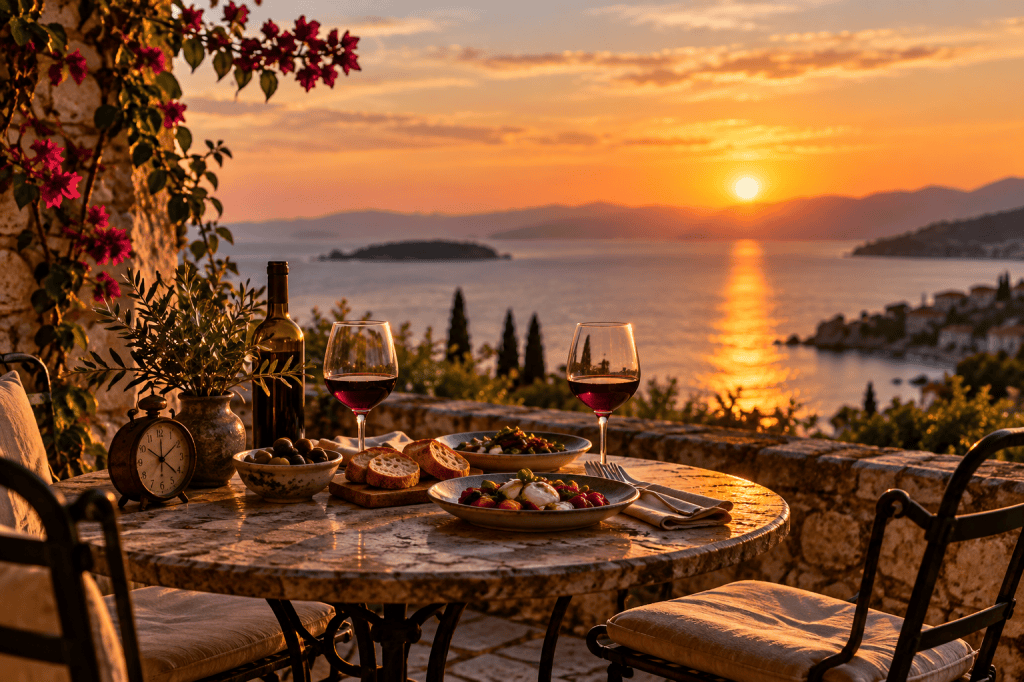
I would rather have a glass of good wine with pleasant company than abstain in order to possibly live a few weeks longer. I would rather eat a truly good dinner than worry about every ingredient.
Above all, I do not want to lie on my deathbed and conclude that I spent my life trying to avoid that very moment. Because I am going to die anyway.
And Then There Is Life After Death
There is another strange aspect to humanity’s relationship with death. For thousands of years, we have devoted enormous amounts of energy to imagining what happens afterwards: heaven, rebirth, eternal life and other notions of a continuation after death.
People have even given up things that make life enjoyable in the hope of being rewarded in the next life.
I have no objection to others believing in life after death. Everyone is free to do so. But I think it is sad if the idea of a possible next life causes someone to neglect the life they actually have.
Life after death is a matter of faith. Life before death is a fact.
It is the only life we know for certain that we get. Yet some people devote more energy to preparing for a possible next life than to appreciating the present one.
In a way, it resembles the longevity industry. Both offer the promise of something better farther ahead, if only we make enough sacrifices today.
I Do Not Want to Live the Longest. I Want to Live the Best.
If I could choose between 80 years filled with experiences, joy, love, good food, travel and laughter, or 100 years of constant self-discipline and deprivation, the choice would be quite simple.
Of course, this is not a real contradiction. You can live healthily and enjoy life at the same time. But when health changes from being a means to becoming the goal itself, I think something has gone wrong.
I want to be healthy so that I can live. Not live in order to try to stay healthy.
Perhaps we should stop asking how we can live as long as possible. Instead, we should ask how we can get as much as possible out of the time we actually have.
Because the truly tragic thing may not be dying too soon. It may be discovering too late that you never really lived.
What do you think? Is maximising the number of years we live most important, or should we become better at enjoying life while we have it?
The featured image was generated with AI.


Lämna ett svar