🇸🇪 Svenska · 🇬🇧 English · 🇪🇸 Español
Allowing the citizenship of someone with multiple citizenships to be revoked is described as creating two classes of citizens. I think that argument starts at the wrong end. The difference already exists.
Someone with two citizenships belongs to two countries and may, depending on those countries’ rules, also have the right to vote in both. That can mean more rights, more opportunities and an additional country to return to. Why should that special status be regarded as self-evidently protected, while the possibility of losing one of the citizenships is called unfair?
Someone who loses their only citizenship becomes stateless. Someone who has two and loses one still has another. Those are two different situations. Taking that difference into account does not necessarily create an injustice. I believe it can correct one.
That said, I have no problem with dual citizenship. People have families, roots and lives that extend across national borders. It is entirely reasonable for citizenship to reflect that too.
But that does not mean that every right and obligation can always be reconciled. Sometimes a choice may be necessary.
If someone is both Swedish and Russian, their loyalties may be put to the test. Military service for two countries can involve conflicting obligations. If the countries enter into conflict, it is hardly possible to defend both against each other. Two passports do not resolve that contradiction.
And if someone commits serious crimes against Sweden—for example, spying for a foreign power—I believe it is reasonable for Swedish citizenship to be revocable, provided that the person retains another citizenship.
This must, of course, require clear legal rules, evidence and the opportunity to have the decision reviewed by a court. “Misconduct” must not become a catch-all provision for getting rid of inconvenient people. Criticising the government is a right. Committing serious crimes against national security is something entirely different.
The objection that the same offence could then have different consequences for different Swedish citizens is relevant. But it does not remove the fundamental distinction: one person would become stateless, while the other would still be a citizen of a country. I believe that difference justifies different possibilities for revoking citizenship.
Dual citizenship may certainly provide double opportunities. But it should not guarantee the right to keep both citizenships regardless of one’s actions.
Background: SOU 2026:21, Revocation of Swedish Citizenship, proposes revocation for people who hold another citizenship in cases including certain very serious crimes. The inquiry’s proposal requires a constitutional amendment and is proposed to enter into force on 1 January 2028.
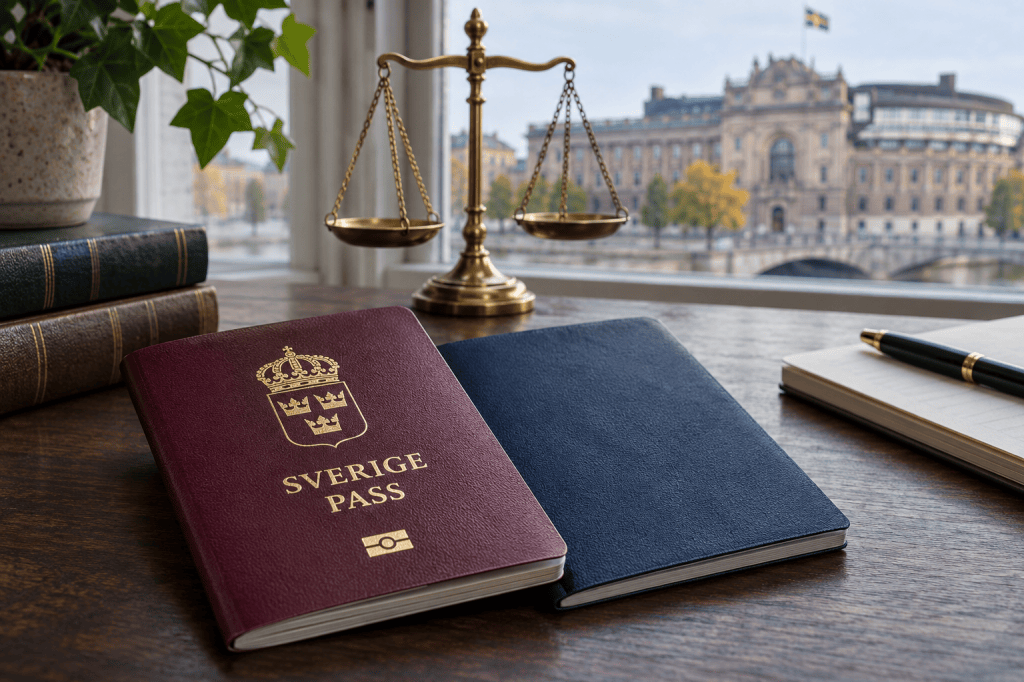
Image: AI-generated illustration.


Lämna ett svar