🇸🇪 Svenska · 🇬🇧 English · 🇪🇸 Español
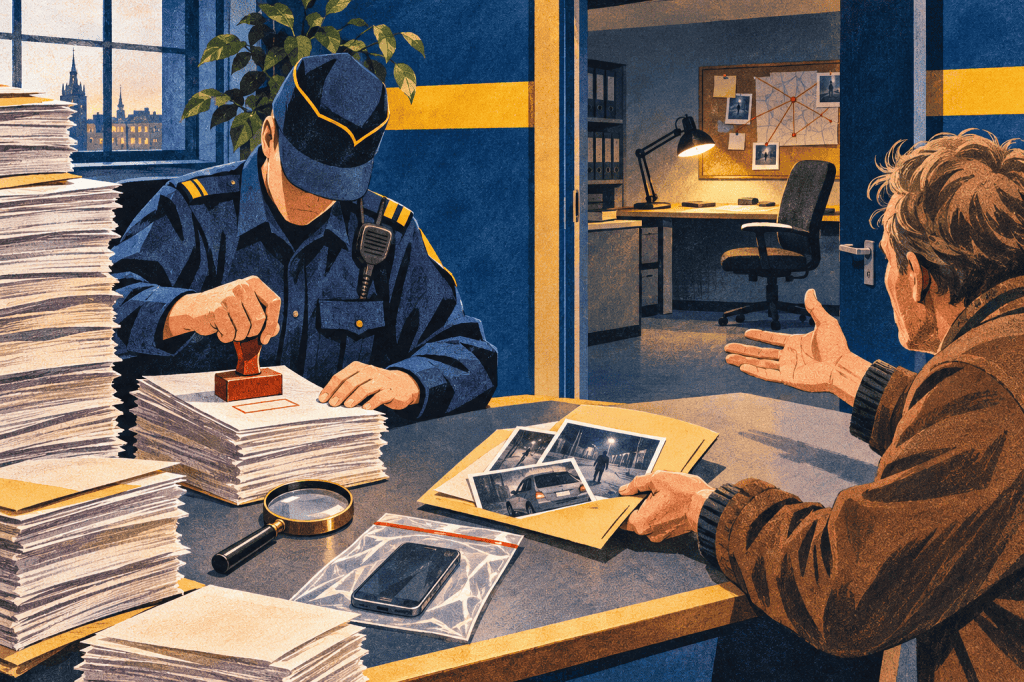
Something is seriously wrong when the police are perceived as more interested in recording a crime than solving it. A theft victim needs more than a case number—especially when there are already concrete leads to pursue.
In Kvartal, Ludde Hellberg describes a theft from the editorial office. According to the article’s public introduction, computers, cameras and other equipment worth well over SEK 100,000 disappeared. When he contacted the cleaning company, he was told that they believed they knew who was responsible. He reported the theft to the police and passed on the information.
That is exactly the kind of story that raises the question: what happens to the information after the report has been registered? A name or a tip does not solve the crime. But it gives the police something to investigate.
When I recently heard Leif GW Persson complain on television about the same problem, I recognised the frustration. The victim points to a possible way forward and wonders why nobody seems willing to follow it.
Suspicion is the beginning of the work
Someone “knowing” who the perpetrator is does not, of course, mean that the matter has been proved. The information may be wrong. That is precisely why the police should investigate: check the claim, test alternative explanations and secure evidence.
What is unreasonable is when the absence of ready-made evidence becomes an excuse not to look for it. Victims should not have to deliver a complete preliminary investigation in order to receive help. If there is a concrete and verifiable lead, it should be assessed and followed up when it can move the investigation forward.
Contacting a named person, speaking to a witness or obtaining relevant footage cannot be treated as some kind of ambition beyond the ordinary police mission. That is police work.
It does not stop with theft
Aftonbladet has reported on an assault victim called Alex. At the time of publication, more than three years had passed despite footage of the assault and his statement that he knew who the people were. The police said that there was no active lead investigator and that measures had to await a new case officer. The prosecution side described how the police had been reminded of investigative instructions.
That case does not show that a single phone call would have been enough for a conviction. It shows something else: that even a case containing concrete information can be left untouched while the victim lives with the consequences.
And the criticism predates these examples. In its 2023 audit, the Swedish National Audit Office pointed to shortcomings in early investigative measures and to how local police areas’ investigative resources were repeatedly diverted to more serious crimes. The audit also identified a conflict between short response times and early investigative efforts at the Police Contact Centre.
Management must answer for the results
Serious crime must be prioritised. But a police organisation must be able to combat it while also investigating crimes that affect people and businesses in everyday life. Otherwise, the promised rule of law depends on the type of crime one happens to suffer.
I want police management to have to answer for what was actually done in cases where usable leads existed. What checks were made? What evidence was secured? Why was a particular lead considered worthless? A decision to close a case should be understandable even to the person who was victimised.
The quality behind the decisions must also be monitored. Closing a case shortens the queue. It does not solve the crime.
When people start to believe that a police report is mostly a piece of paper for the insurance company, something has broken. My fear is that victims learn there is no point in reporting crimes while perpetrators learn that the risk of being investigated is small.
The most dangerous part is what happens when people stop believing that the police will do their job. That opens the door to vigilante groups and private justice: theft victims who seek out the suspect themselves to recover their property, assault victims who retaliate with baseball bats, and parents who seek brutal revenge against someone they believe raped their daughter. Innocent people may then also be harmed, and revenge can breed further violence. If we do not want such a society, people must be able to trust that the police investigate and that the justice system holds the guilty accountable. The state cannot demand that citizens refrain from taking the law into their own hands and then leave them without help when they become victims of crime.
We should be able to demand that concrete leads are taken seriously. The police have not completed their mission merely because the crime has been given a number.
Image: AI-generated illustration.


Lämna ett svar