🇸🇪 Svenska · 🇬🇧 English · 🇪🇸 Español
I want a political party that bases its policies on two equally important principles: what is good for Sweden and people’s freedom to choose for themselves how they want to live. By Sweden, I mean all of us who live here legally, whether we have lived here for generations or arrived yesterday, as well as our citizens abroad.
1. What is good for Sweden?
The main route for immigrating to Sweden should be a desire to contribute to a better country by working, studying or building businesses—not coming here to live on benefits instead of working. Integration policy should make it easier to learn Swedish, find work and support oneself. At the same time, we should take our share of international responsibility for refugees, through reception or assistance in other countries where such help is possible, with respect for the right to protection.
Environmental policy should not reward the closure of Swedish industry when production simply moves to China instead. According to the Swedish Environmental Protection Agency, 61 percent of Sweden’s consumption-based greenhouse-gas emissions occurred abroad in 2024.
Healthcare should prioritise care over administration. Energy policy should prioritise reliable electricity, reasonable prices and low climate impact over any particular technology. We should be members of the EU and NATO because that benefits Sweden, while still being able to question Parliament’s travelling circus, support for wine producers and unnecessary bureaucracy.
Business policy should make it easy to start, run and develop companies. Shorter permitting processes, stable rules and simpler tax regulations matter more than politicians handing out subsidies to the companies they themselves believe in.
Swedish bureaucracy should also be judged by its usefulness. Why should a business owner submit the same information to several government agencies? Let the agencies coordinate with one another instead of placing the work on the business owner. Measure agencies by their results, not by how many inspections they carry out.
2. People’s freedom to choose
The goal should not be for a certain proportion of young people to start university, but for everyone who wants to and has the ability to be able to do so. At the same time, society can encourage training for shortage occupations through measures such as paid police training. Police training already includes a paid probationary period. Education for personal development need not always receive the same financial support.
Gender equality should be about equal opportunities, not requiring women’s and men’s free career choices to produce a particular gender balance. Parents should be allowed to decide for themselves how to divide parental leave. People should, to a greater extent, be free to decide over their own homes, property and daily lives, as long as they do not harm others. I developed that argument in Who Protects Us from Politicians’ Meddling?
Why should politicians micromanage how I use my home, how I allocate my working time or when I retire? Rules should protect other people and shared interests, not micromanage adults’ lives. Old laws should also be reviewed regularly, and those that no longer serve a reasonable purpose should be abolished.
Two questions before every political decision
The task of politics is not to decide how we should live, but to create the conditions for us to live as we wish.
Before every reform, I therefore want to ask two questions: Does it make Sweden better? And does it respect people’s freedom to shape their own lives?
Such a party would also assess every possible government by the same two questions—not by how many ministerial posts it could obtain or which other parties it could keep away from the spoils of office.
That is the kind of party I am looking for.
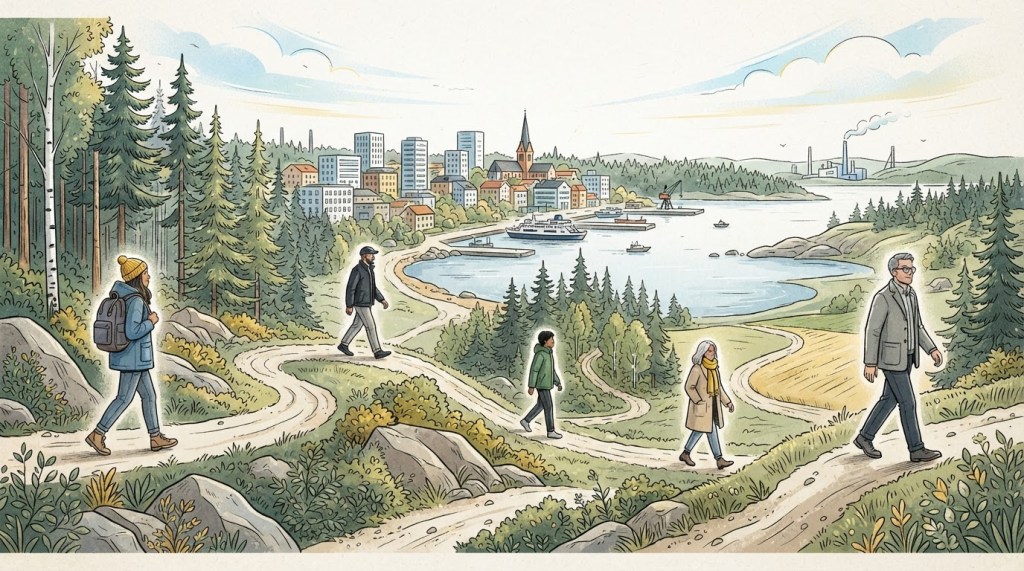
The image is AI-generated. Originally published in Swedish on 24 November 2026.


Lämna ett svar