🇸🇪 Svenska · 🇬🇧 English · 🇪🇸 Español
The most important goal of aid organisations should be to make themselves unnecessary. When the same problem is funded year after year, we must ask whether the money is being used to solve the problem or merely to mitigate its consequences.
Set an end date
Long-term aid and public support for aid organisations should be granted for no more than ten years. From the outset, there must be a credible plan for solving the problem and making the support unnecessary.
Distributing food to people who are starving is obviously justified in an acute disaster. But if the same people need food parcels year after year, we must find ways for them to support themselves. Building a functioning well with local management is better than paying for water deliveries forever.
The UN refugee agency UNHCR has itself described how attempts to create self-reliant refugee settlements turned into long-running programmes providing food, water and other necessities. Other solutions are needed, such as opportunities to work, local integration or a safe return.
Who are we really helping?
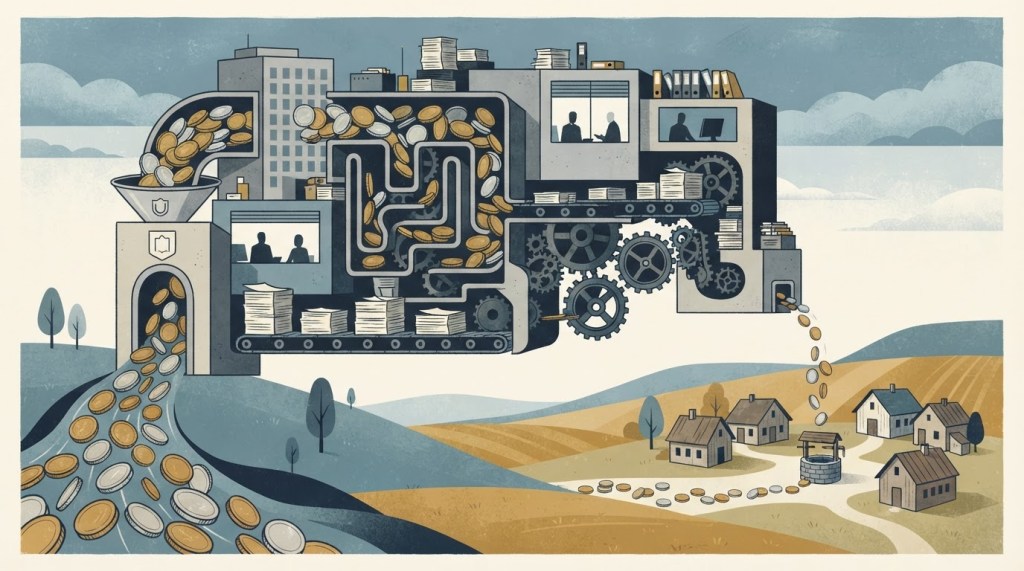
When aid becomes permanent, there is a risk that the money increasingly supports the aid organisations rather than the people in need. Salaries, offices, administration and fundraising become an operation that itself needs funding.
This also creates a directly unhealthy incentive. If an organisation’s revenue and its employees’ jobs depend on a problem remaining, what happens to the incentive to solve it? The bigger the problem appears, the stronger the argument for more money. In the worst case, the system creates incentives to make the problem worse—or at least to exaggerate its scale and play down the progress actually made.
No dishonest people are required to create such a system. It is enough to reward the wrong things. That is another reason to scrutinise international organisations, something I wrote about earlier in The UN Has Become a Parody—Shut the Damn Thing Down.
Reward results, not activity
Every long-term initiative should have measurable goals, independent evaluations and an exit plan. If progress fails to materialise, the method should change rather than automatically receiving more money. The ten-year limit must not be circumvented by changing the project name or recipient.
Major problems can be solved. The WHO’s intensified smallpox campaign began in 1967, and the disease was declared eradicated in 1980. It took more than ten years, but it shows what a clear end goal can achieve.
The goal is for aid to end
Emergency relief should save lives. Development aid should create the conditions in which people no longer need help. If an initiative cannot solve the problem within ten years, we must seek other solutions rather than make it permanent.
Success should not be measured by how much aid we pay out, but by how much aid is no longer needed.
The image is AI-generated. Originally published in Swedish on 25 November 2026.


Lämna ett svar