🇸🇪 Svenska · 🇬🇧 English · 🇪🇸 Español
When I buy or sell shares, I pay brokerage fees. When my fund manager does the same, I pay too, albeit indirectly. But what happens when the party paid for the trade belongs to the same corporate group as the party deciding how often trades should be made?
The bank can make money twice
The fund company receives its management fee regardless of how much the fund trades. Brokerage and currency-exchange costs, however, are charged to the fund’s assets. If the bank that owns the fund company also executes the trades, the group can earn additional revenue. It does not have to be a kickback or a regulatory breach to create a conflict of interest.
Handelsbanken and SEB stand out in the comparison
According to the Swedish Pensions Agency’s figures for 2025, Handelsbanken Amerika Tema had a turnover ratio of 1.51 and SEB Europe Equity Fund 1.05. This corresponds to portfolio turnover of 151 and 105 percent respectively during the year. By comparison, Handelsbanken Global Index Criteria was at 23 percent. The funds have different investment mandates and the figures do not prove unnecessary trading, but they do warrant questions about the costs.
As early as 2004, the Swedish Financial Supervisory Authority’s report on conflicts of interest in fund companies showed that, in 2002, Handelsbanken Fonder placed 40 percent of its trading in Swedish equity-related instruments with affiliated companies. For SEB Fonder, the corresponding share was 20 percent in 2003. The authority also found that two of the nine fund companies examined conducted all foreign-exchange trading with affiliated parties. It did not, however, find evidence that brokerage fees paid to affiliated parties were above market rates.
These are historical figures, not proof that the same trading patterns apply today. I have not been able to determine how much of the two current funds’ transaction costs goes to their respective banking groups.
Small fees become large sums
Assume a fund worth SEK 10 billion that pays 0.05 percent in brokerage fees. If total buying and selling volume rises from SEK 10 billion to SEK 40 billion, brokerage fees increase from SEK 5 million to SEK 20 million. If all trading goes through the group’s own bank, the bank receives SEK 15 million more in revenue. Fund investors pay. This is an illustrative calculation, not information about the banks’ actual revenues.
Disclose who receives the money
I want every fund to clearly disclose how much it pays in brokerage fees and currency margins, how much goes to affiliated companies, and how the manager ensures that the trading genuinely benefits investors. These figures should be as easy to compare as the management fee.
A fund manager should make money by managing my money well, not by moving it around. If the bank profits from every trade while I bear the cost, our financial interests differ. That is a conflict of interest that deserves far more attention.
Original publication date: 27 November 2026.
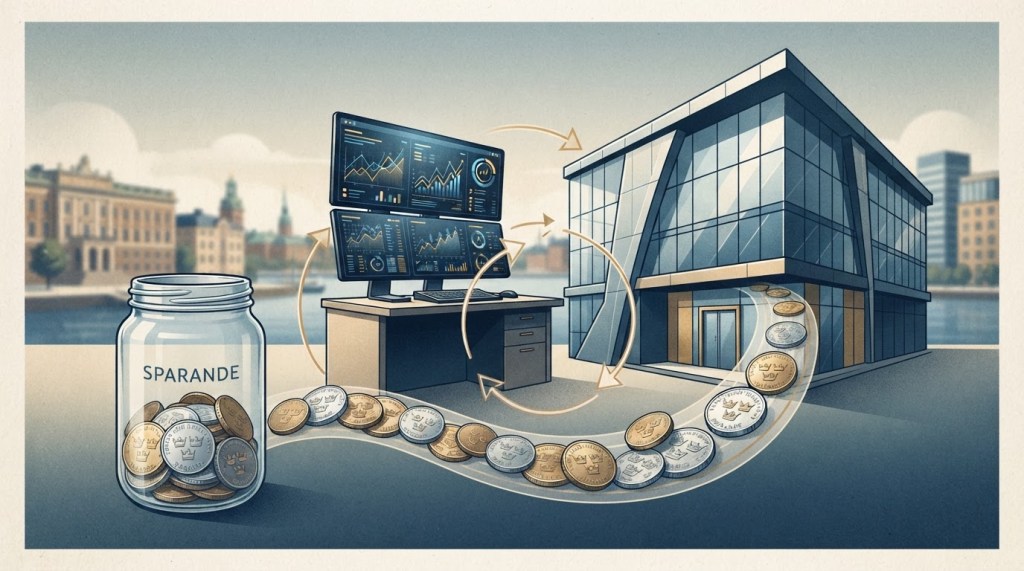
The image is AI-generated.


Lämna ett svar