🇸🇪 Svenska · 🇬🇧 English · 🇪🇸 Español
Why should it have to cost thousands of kronor to place a dead person in a coffin that is then burned? And why should the state decide what the family may do with the ashes?
Much in our society is governed by tradition rather than common sense. Funerals are a clear example.
When someone dies, the family is expected to arrange a coffin. It can cost many thousands of kronor, even though in a cremation it will soon go up in smoke together with the body.
What is the point, really? The deceased is hardly likely to care.
Of course, anyone who wants a beautiful coffin should be allowed to have one. But why should it be necessary? A simple shroud or another dignified, hygienic and environmentally friendly alternative ought to be enough. Safety requirements do not have to mean that everyone must buy a coffin.
Whose ashes are they, really?
Even stranger are the rules surrounding the ashes.
In Sweden, relatives are normally not allowed to keep the ashes of someone who has died. They must be interred, usually within one year. Permission may be granted to scatter them in another suitable place, but keeping the urn at home is not allowed.
Why?
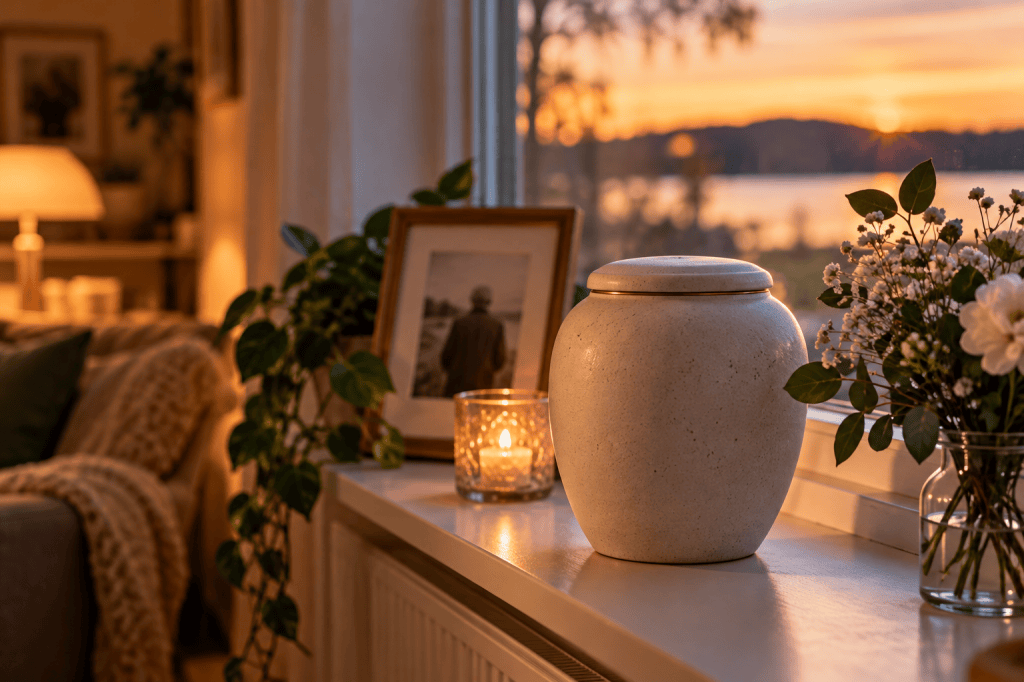
If a widow wants to keep her husband’s urn on a shelf at home, who is harmed by that? If children want to keep their mother’s ashes, why should the state say no?
In other countries, this is entirely possible. It should be possible in Sweden too.
Respect is not about money
The funeral industry offers everything from exclusive coffins to lavish ceremonies. There is nothing wrong with that, as long as people choose for themselves.
But grief is hardly the best time to make financial decisions. No one should have to feel stingy for choosing not to buy an expensive coffin.
Respect for the deceased is not measured in kronor. It is measured by how we treated the person while they were alive and how we remember them afterwards.
I think we should change the rules so that:
- Cremation and burial without a traditional coffin are permitted when they can be carried out safely and with dignity.
- Relatives may keep the ashes at home if that accords with the wishes of the deceased.
- The individual’s wishes carry more weight than old traditions.
Anyone who wants a traditional funeral should of course be allowed to have one. But anyone who wants something simpler should have the same right.
It is actually strange that we talk so much about individual freedom during life, yet let the state decide what happens to the ashes after death.
And on one point we can probably agree: the person in the coffin will not complain that it was too cheap.
Read more: the Swedish Funeral Act and the Swedish Funeral Ordinance.
This translation was prepared with AI. The original featured illustration was generated with AI.


Lämna ett svar