🇸🇪 Svenska · 🇬🇧 English · 🇪🇸 Español
It is easy to be wise after the event. I will therefore try not to be unnecessarily harsh on the politicians who have managed Sweden’s head start. But that is difficult when so much of what we once took for granted is now discussed as a set of problems to be solved at some point in the future.
Sweden built a strong industrial sector, technological expertise and a welfare system that other countries looked upon with envy. Hydropower and nuclear power gave us favourable conditions for a stable electricity supply with low carbon emissions. We also built a defence force capable of defending the country.
Imagine if Swedish politicians had been as interested in preserving all this as they were in putting their own stamp on it.
Electricity was meant to be a competitive advantage
Hydropower and nuclear power were assets to be developed. They gave us a foundation of electricity generation that did not depend on the wind blowing at the very moment the power was needed.
Percy Barnevik captured the absurdity. He described Sweden’s electricity as affordable, environmentally advantageous and reliable—an asset the rest of the world envied us for—and concluded ironically: “And our main concern is how to get out of this situation as quickly as possible.” The quotation is reproduced by Tidningen Näringslivet. It is hard to find a more apt description of political meddling.
Sweden still produces a great deal of electricity and, over the course of a year, exports a substantial amount to neighbouring countries. This is shown by the Swedish Energy Agency’s statistics for 2025. The problem is that an annual balance does not tell us whether electricity is available in the right place at the right time.
Svenska kraftnät explains how the closure of power stations in southern Sweden has increased the need for transmission from other areas. When the grid does not have sufficient capacity, price differences arise.
This should have been an obvious part of political responsibility: ensuring that generation, the grid and demand fit together before allowing functioning capacity to disappear. Wind power can contribute a great deal of electricity, but weather-dependent generation places different demands on the rest of the system. Someone must then take responsibility for the whole.
I want Sweden once again to be able to offer industry an electricity supply it can rely on. That should be a basic requirement in a country that intends to make its living from advanced manufacturing.
A defence force can be dismantled faster than it can be built
According to SOU 2025:86, page 146 of the PDF, Sweden’s total defence could mobilise around 800,000 conscripts in 1958. Sweden had a considerably smaller population at the time.
Today’s defence requires different technology and organisation. My point is the willingness to prepare the country for something everyone hoped would never happen.
That caution should have survived the Cold War. A changed security environment could justify changes, but it was no guarantee of eternal peace. Even so, we dismantled capabilities that now have to be rebuilt.
It is strange how often politicians can call it responsible when they first cut away a capability and then allocate money to restore it.
Who takes responsibility for what already works?
My objection extends beyond these two policy areas. For far too long, I believe Swedish politics has rewarded new projects, grand words and good intentions. Maintaining something that already works rarely attracts the same attention.
Yet that is the very essence of stewardship: handing over a country with better prospects than when you received it, and understanding what prosperity rests upon before you start unscrewing the parts.
We still have skilled engineers, strong companies and people who work and contribute to the common good. I want politicians who manage their efforts better.
Imagine if the ambition were to make Sweden the best again at the things that truly matter in people’s everyday lives. And imagine if we voters began demanding results instead of settling for yet another explanation of why things did not turn out as promised.
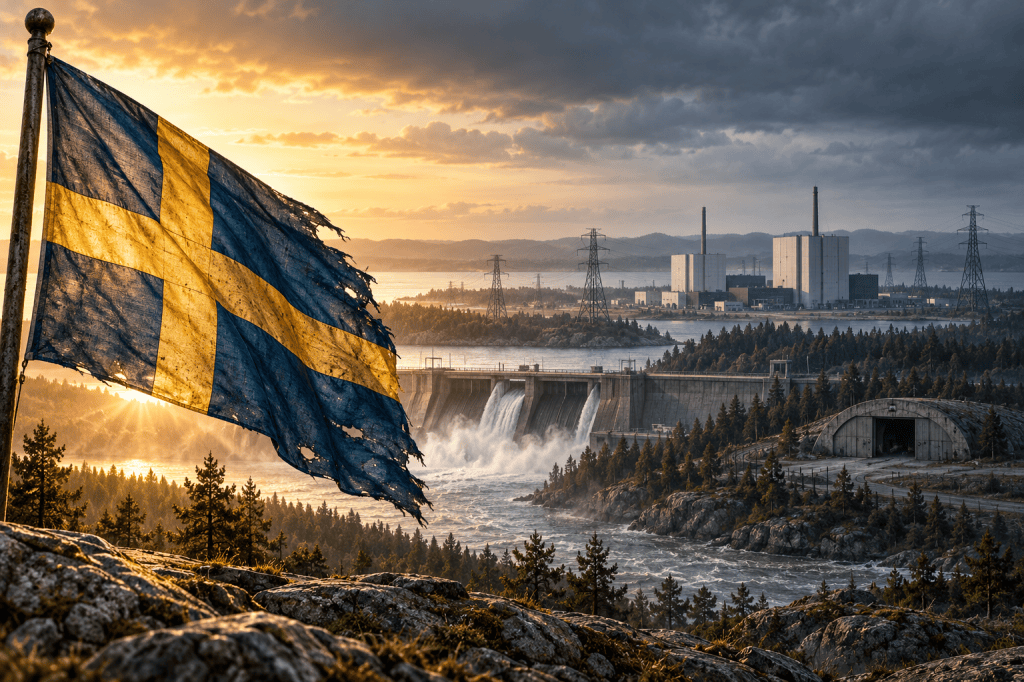
The illustration is AI-generated.


Lämna ett svar