🇸🇪 Svenska · 🇬🇧 English · 🇪🇸 Español
Originally published on 27 September 2026.
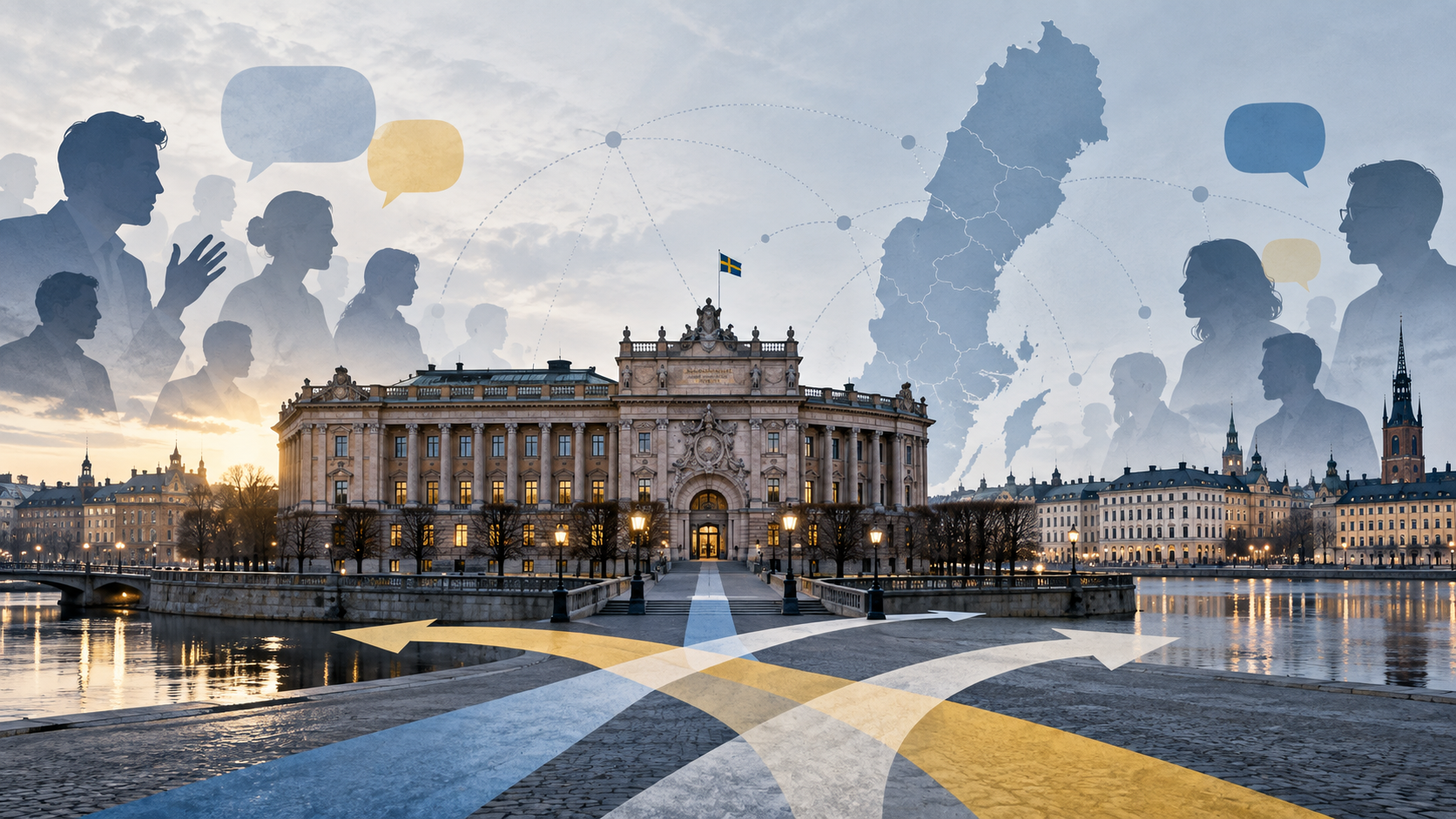
During the pandemic I wrote that the left–right scale had outlived its usefulness in Swedish politics. Reading it today, I still think there is something to that idea, but I would put it less categorically.
The 2026 election shows why. S, V, C and MP hold 176 seats between them, while M, SD, KD and L have 173. Following the election, Magdalena Andersson was asked to explore the formation of a government, and as I write the question remains open. The Swedish Election Authority provides the final result, while Parliament describes the government-formation process. One problem is that parties seem less interested in policy than in the game of power: who may work with whom, rather than how far apart they are on substantive questions. Parties have also changed positions to appeal to voters between them, while rhetorical differences are portrayed as ideological chasms—over, for example, criminal responsibility at age 13 or 14, or the argument about sentence reductions for multiple offences.
Left and right are not enough
The difference between left and right has not disappeared. Taxes, the labour market, welfare and the state’s role in the economy still divide the parties.
But that scale explains less and less. Migration, crime, energy, defence and personal freedom cut across politics in other ways. Alliances once considered unthinkable become possible when 175 seats are needed.
That does not mean ideologies are gone. Politics is also about power, compromise and which issues a party is willing to concede to advance others.
How much should politics decide?
During the pandemic, the question of state power over individuals became very concrete. The pandemic has ended, but the same underlying question remains in debates about surveillance, crime prevention, the internet, freedom of expression, migration and public health.
People should be able to decide as much as possible about their own lives, provided their choices do not cause substantial harm to others.
The state should set the rules, enforce the law and protect people’s rights. It should not intervene in everything merely because it can be regulated.
Freedom and a safety net
I believe in markets, but not in the idea that markets solve everything. I want a society where people can seek their own happiness, start businesses, earn money and live as they choose—but where illness, unemployment or misfortune do not leave them without support.
Those goals need not conflict. Markets can be freer while a clear social safety net remains. Private and public solutions can exist side by side without forcing everything into one model.
A state that does the right things
A less intrusive state need not be a weak state. I would rather have a state that does fewer things well than one that attempts everything.
The police and courts should work. The armed forces should be able to defend the country. Schools, healthcare and care services should be of high quality. People who truly need society’s help should receive it.
But every public expense should face the question: Does the state really need to finance this?
A different political map
I see politics along at least two axes. One is economic: more market or more state. The other concerns individual freedom: how much should the state, the collective or the majority decide about a person’s life?
That makes it possible to support a strong social safety net while remaining sceptical of surveillance; to believe in markets while wanting healthcare for everyone; and to demand clear rules on migration while taking a liberal view of those who can support themselves and want to be part of Sweden.
That is roughly where I stand: broad individual freedom, functioning markets and a basic social safety net. A state that is strong when needed—and otherwise has the sense to leave people alone.

